Here are five steps we use to improve AI search citations without treating AI visibility as a separate marketing silo.
Step 1: Establish Your Organic and AI Citation Baseline
Start with a baseline that ties AI citations to organic visibility. You need to know where your pages rank, where AI engines cite them, and where competitors replace them.
Pull your priority commercial queries first. Include category searches, comparison searches, alternative searches, problem searches, and use-case searches. Focus on queries that could influence a shortlist or sales call. A brand mention for a broad educational question may help awareness. A citation on a comparison question is usually closer to revenue.
Next, test those topics in ChatGPT, Perplexity, Gemini, Google AI Overviews, and Google AI Mode. Record four things for each prompt:
- Whether your brand appears.
- Which page gets cited.
- Where your citation appears in the answer.
- Which brands and sources appear instead.
Run the same check in Google Search Console and your normal rank tracker. Google does not give you one clean report for every AI surface, so keep organic rankings beside AI observations. That comparison often exposes the real issue. If the cited page has also lost organic visibility, fix the page and its supporting links before buying another AI tracker.
Check access at this stage. Review robots.txt, noindex rules, canonical tags, server responses, and rendering. A page blocked from Bingbot, OAI-SearchBot, or ChatGPT-User cannot become a reliable source for those systems. Keep access decisions deliberate. Public product and editorial pages need a clear path for approved crawlers, while private areas should stay closed.
For a deeper audit of this starting point, our AI citation audit for B2B SaaS keeps organic rankings, crawl access, and cited URLs in one review.
By now you should have a short list of priority topics, a record of current citations, and a page-level view of the gaps. Don't begin with a single blended visibility score. It hides too much.
Step 2: Track Prompts and Reverse-Engineer Citation Opportunities
Improve AI search citations by tracking buyer prompts in small, focused groups. A broad score across hundreds of unrelated questions gives leadership a tidy number, but it rarely tells your team what to fix.
Build a mini prompt index for one persona, one buying stage, and one topic. For example, you might track enterprise finance leaders at the comparison stage for revenue operations software. Keep that group separate from branded prompts and early research questions.
Turn each target keyword into two or three natural questions. “Revenue operations software” might become:
- What are the best revenue operations platforms for an enterprise team?
- Which revenue operations tools connect sales and finance data?
- What should a finance leader check before choosing revenue operations software?
Don't generate 50 near-identical versions of one question. That can spread one intent across too many pages and lead to content overlap. Use variations that reflect real differences in buyer need, company type, or decision stage.
Run each prompt more than once. AI answers can vary with model updates, location, login state, and prompt wording. Treat one result as an observation, not a verdict. Store the prompt, model, date, cited URLs, brand position, sentiment, and answer type. Position matters. A citation at the start of an answer carries a different business value from one buried in a long source list.
Then reverse-engineer the winners. Compare your page with the pages cited for the same prompt. Look at the answer's structure, not just word count. Check whether the cited page gives a direct answer, supports it with named facts, uses clear headings, and covers the related questions that the model appears to ask.
Make one change at a time where possible. If you rewrite the page, add new links, change schema, and alter the title together, you won't know what moved the result. Citation tracking measures the gap. It doesn't fix the gap by itself.
Separate product surfaces from research work, because model behavior and available features can change independently. Keep your tracking notes tied to the exact model and surface you tested, rather than treating “AI” as one result type.
Optimitor uses this narrow approach because a CMO needs to know which category and buying stage improved. A giant score cannot answer that question.
Step 3: Structure Content for Citation-Ready Answers
Make every important page easy to quote. AI systems need a clear path from a question to a self-contained answer.
Put the main answer near the top. If the page asks whether a tool supports a certain workflow, answer that question in the opening section. Don't make the reader, or an answer engine, work through a long story first.
Use one clear H1. Build a logical H2 and H3 hierarchy beneath it. Write headings that match real questions, such as “How does revenue attribution work?” or “What does this integration support?” The text below each heading should answer that question directly in its first sentence.
Keep each section focused on one idea. Short paragraphs help readers scan and give an AI engine a clean block to extract. Use a table when the user needs a comparison. Use a bulleted list for steps or conditions. Use an FAQ when several short questions support the main intent. These formats reduce the chance that a useful fact gets lost inside a dense paragraph.
Schema markup adds another layer of clarity. JSON-LD can describe an article, product, organization, FAQ, or review in machine-readable form. It does not rescue weak content. It helps systems identify what a page and its entities represent when the visible text and site structure already agree.
Keep names consistent. If your company is called Optimitor on the organization page, don't switch between several brand forms across your site. Link related pages with descriptive anchor text. Make authorship visible. Add a source when a claim depends on outside data. A page that makes a precise claim without showing where it came from is harder to trust and harder to quote safely.
AI-assisted drafting can help with a first pass. Use it to split dense paragraphs, find unanswered questions, or turn notes into a page outline. A human still needs to check every claim, remove invented detail, and add the information that only the business can know.
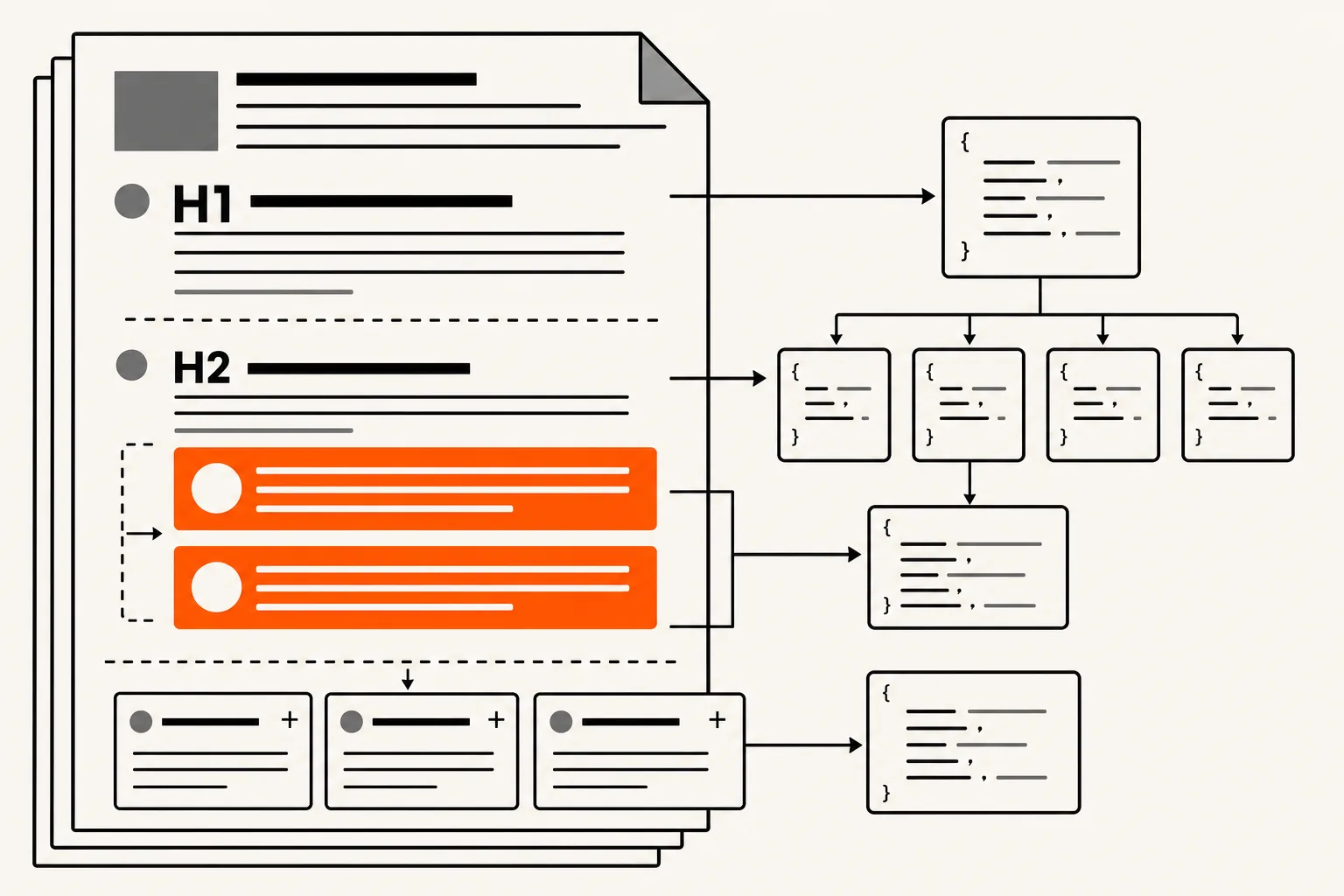
Our best practices for getting cited by ChatGPT follow this same rule: make the answer clear before trying to make it clever.
Before publishing, lift the first sentence under each key heading and read it alone. If it sounds incomplete, rewrite it. That small test catches many citation problems.
Step 4: Build Authority With Proprietary Data and Machine-Readable Assets
Build sources that contain information other pages cannot copy.
A useful proprietary asset might be a benchmark based on your own customer data, a documented test, a survey with a clear method, or a data set from a repeatable internal process. State who collected the data, when it was collected, what the sample includes, and what it cannot prove. Add a named author or research lead. Keep the method visible on the page.
AI visibility research needs defined tests, not loose claims about what “the algorithm” likes.
Don't hide the useful part in a PDF alone. Put the key finding in HTML on a stable URL. Add a summary near the top. Give each chart a text explanation. Publish the data definition beside the result so an AI engine can attribute the finding without guessing.
Machine-readable assets can extend that work. A public API, a clean data dictionary, a structured product feed, or a well-marked organization page may give agents a more direct way to understand your information. The asset still needs access rules, clear ownership, and consistent entity names. A badly labeled feed creates more confusion than value.
Schema supports this identity layer. Use JSON-LD to describe the organization behind the research, the author, the date, and the subject. Keep the markup aligned with what users can see. Never mark up claims that the page does not make.
Authority also exists outside your site. Look at the pages that cite competitors. Some may be trade publications. Others may be partner pages, independent reviews, or community discussions. Earn coverage where it makes sense. Do not flood third-party sites with copied brand text. The goal is a wider, consistent record of what your company does and where its evidence comes from.
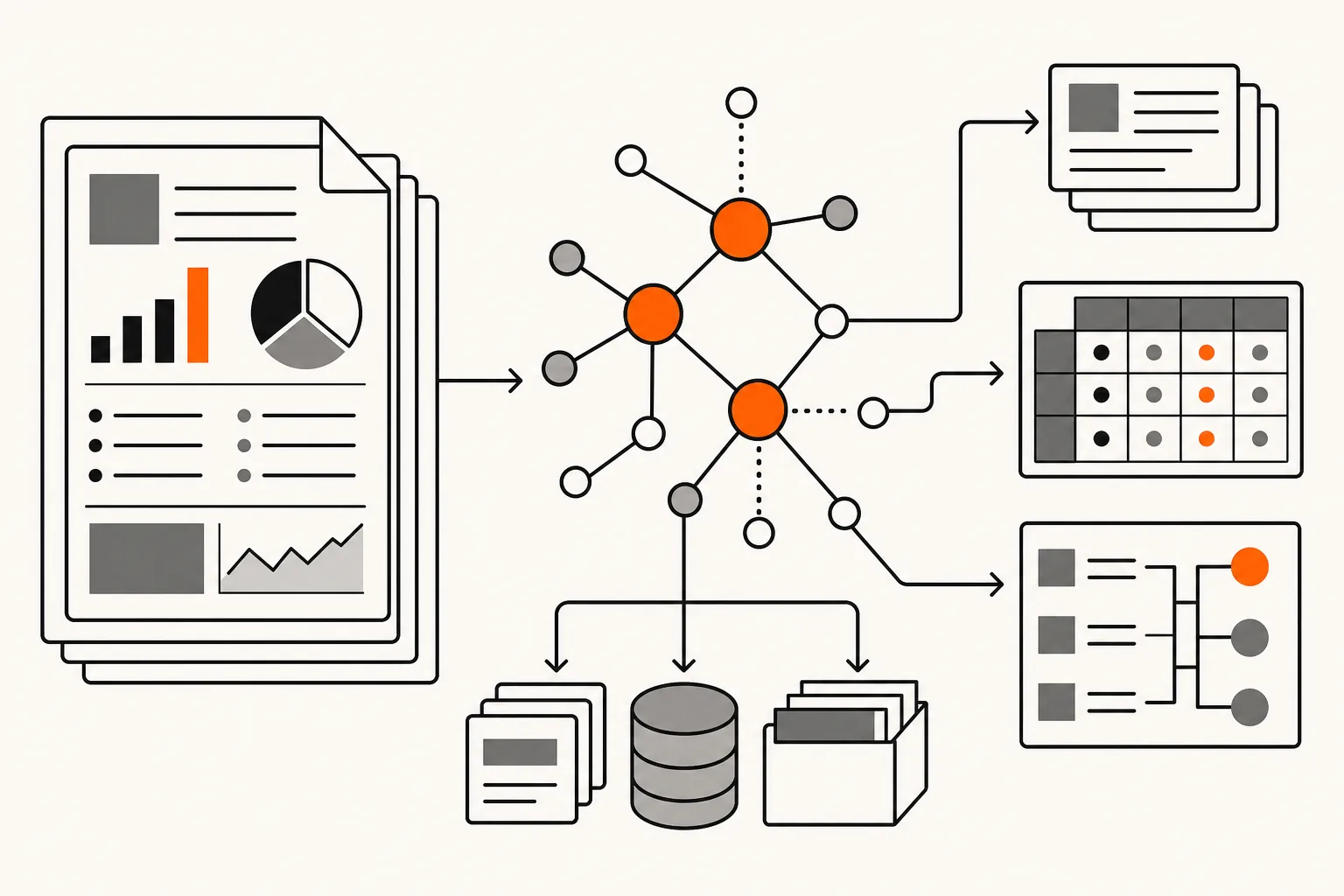
A research page can earn a citation without making your brand a recommendation. Treat those as separate goals. Evidence improves source coverage. Clear positioning and comparison content help with shortlist inclusion.
Build one strong asset before you build ten thin ones. Then update it when the data or method changes. Content freshness matters because old claims lose value when the market has moved.
Step 5: Measure Cross-Model Citation Share and Improve the Gaps
Measure citation share by model, prompt group, page, and competitor. Cross-model reporting shows whether a change works broadly or only on one surface.
Create a simple review sheet with these fields:
- Prompt cluster and buyer stage.
- Model and search surface.
- Your citation status and answer position.
- Cited URL and page type.
- Competitor citations.
- Brand sentiment or recommendation status.
- Organic ranking for the related search.
Separate citation share from recommendation share. An engine may cite your benchmark while recommending a competitor's product. That means your evidence is useful, but your category positioning may be weak. Fix the right page for the right problem. Improve evidence pages for source coverage. Improve comparison, use-case, and product pages for shortlist visibility.
Review results on a set schedule. Compare like with like. A prompt run in ChatGPT should not be placed in the same row as a Google AI Overview result without marking the difference. Watch movement across several runs before changing strategy.
When a competitor wins, ask why. Did its page answer the question sooner? Did it publish a data point you lack? Does another site describe that competitor more clearly? Did your page become hard to crawl? Each answer leads to a different action.
Use dashboards for diagnosis, not theater. A tracking tool can show that your citations fell. It cannot decide whether the fix is technical SEO, a better answer block, new evidence, or stronger third-party coverage.
At Optimitor, we connect the prompt record to the page and ranking work behind it. That keeps AI citation reporting tied to a business question: did the right buyer see the company in the right context?
Frequently Asked Questions
How long does it take to improve AI search citations?
Improving AI search citations can take weeks or longer, depending on the problem. Crawl access and page structure may change soon after deployment, while rankings and third-party mentions need more time. Track the same prompts after each meaningful release. Don't judge the work from one answer or one model run.
Does traditional SEO still affect AI citations?
Traditional SEO still affects AI citations because many answer engines retrieve information from searchable web sources. Strong rankings do not guarantee a citation, but poor crawl access, weak page structure, and low authority make citation less likely. Fix organic visibility first when the cited page has already lost its search position.
Should I block AI crawlers in robots.txt?
You should not block approved AI crawlers from public pages if you want those pages considered for AI answers. Review each bot and path instead of opening your whole site. Keep private, paid, or sensitive areas restricted. A page that an engine cannot access cannot become a source for that engine.
What content format gets cited by AI search engines?
AI search engines often cite content with a direct answer, clear headings, short sections, visible sources, and useful supporting detail. There is no magic AI format. A well-structured comparison page may work better for a shortlist query, while a documented study may work better for a factual question.
How can teams measure AI citation performance?
Measure AI citation performance with focused prompt groups instead of one universal score. Track the model, prompt, cited URL, answer position, competitor sources, sentiment, and related organic rank. Review citation share beside recommendation share, because being used as evidence does not always mean being named as the best choice.
Conclusion
Start with crawl access and organic rankings, then improve the pages that answer high-value buyer questions. Track focused prompts across the models your buyers use, and connect every citation change to a page-level action. If your team needs help joining that work into one programme, Optimitor can assess the first citation gap and build the next test from it.
See the baseline before the build
Six searches, one category, one commercially useful diagnosis — including which page should have won the answer.
Request the teardown ↗