1. Optimitor
Optimitor is a senior-led SEO and AI search visibility agency for B2B SaaS companies and high-repeat-purchase consumer brands. It is best for marketing leaders who need one programme for organic rankings, AI mentions, and commercial growth.
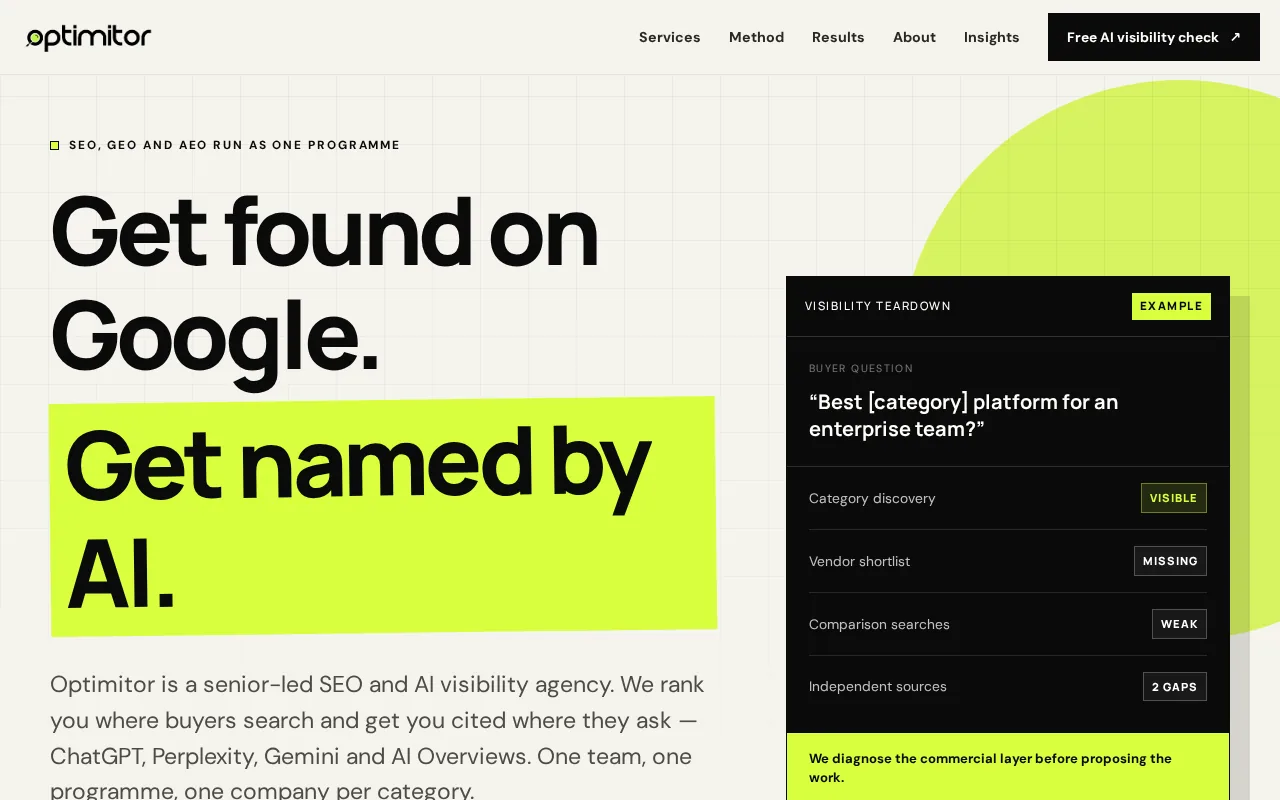
we include Optimitor here because citation tracking alone doesn't fix weak source coverage. A dashboard can show that ChatGPT, Perplexity, Gemini, Google AI Overviews, or AI Mode skipped your brand. It can't, by itself, improve the page that should have been cited.
Our work starts with technical SEO. Then we map category, use-case, comparison, and problem searches to the pages that should answer them. The work can focus on gaps in content, entities, internal links, structured data, and authority.
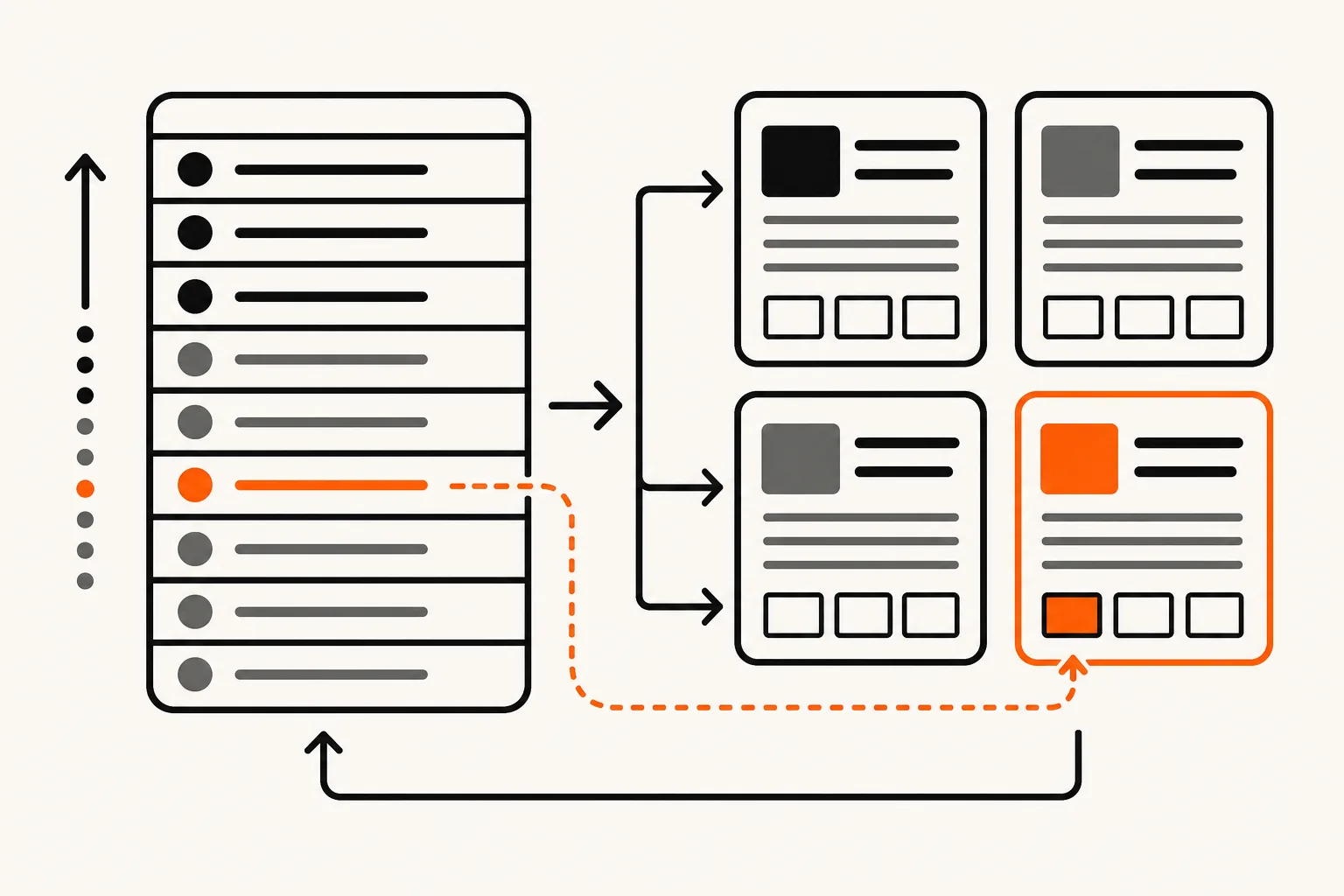
That approach reflects a simple operating view: AI visibility is downstream of organic visibility. Generative systems often draw from pages that already rank or from sources with strong trust signals. A ranking loss can therefore reduce citation coverage at the same time.
We also separate two problems that teams often mix up. A brand may be cited as a source without being named as the recommended choice. Source coverage needs better evidence and clearer pages. Recommendation share needs stronger category signals, brand authority, and proof that supports the buying decision.
For a CMO, this distinction changes the work plan. If a buyer asks for the best workflow tool and your page appears only as a reference, rewriting the page title won't be enough. You may need a comparison page, stronger product evidence, better links between use cases, and earned mentions from trusted sites.
We track citation presence, response position, cited URLs, prompt intent, and competitor coverage. Those signals can also be compared with organic rankings. The goal is a usable work queue, not a polished chart that nobody acts on.
There is a trade-off. Optimitor is a service, not a self-serve dashboard for a small team that only wants to run a few prompts. The engagement also works best when your business has enough customer value to support a serious SEO programme. Our stated fit is one company per competitive category, with an initial term built around sustained work rather than a one-day report.
If your team needs a narrower review of tracking products before choosing a service, our AI citation tracking tools comparison gives that question its own treatment.
2. Service Stories
Service Stories is an AI marketing tool built for auto-repair shops. It is best for a shop focused on new-customer acquisition through AI search and local SEO, not for a general marketing department with a broad software stack.
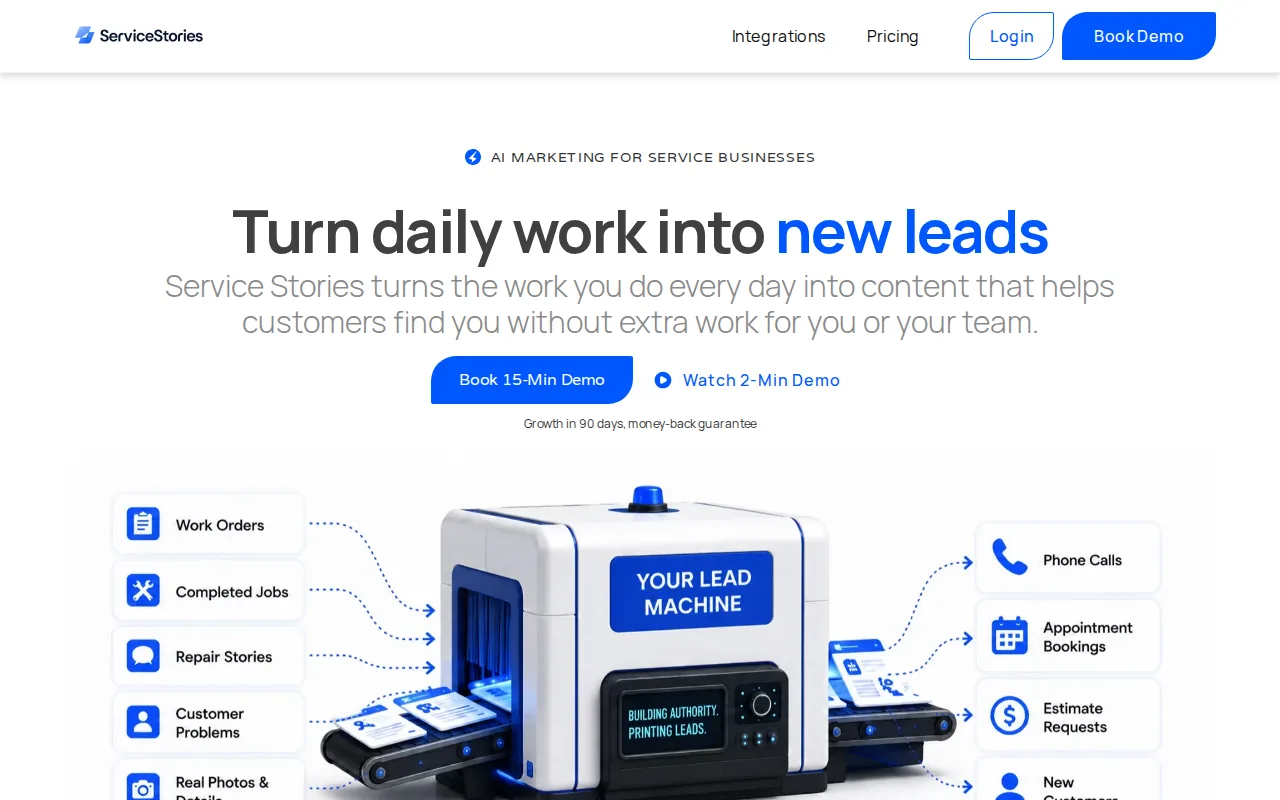
The product stands out because the category search produced one strongly vertical result rather than a long list of general marketing platforms. Service Stories says it can turn completed work orders into content for blogs, social media, a Google Business Profile, and other channels within an hour.
That workflow makes sense for a repair shop. Completed work contains details about common faults, repairs, makes, symptoms, and customer questions. Turning that material into local content can help a shop publish information tied to the work it actually performs.
The speed claim is the main appeal. A small shop may lack a content manager, so a system that turns shop records into a month of draft material could reduce the gap between daily work and published content. The output still needs a human check. A service business should verify each repair detail before publication.
For a shop already using Tekmetric, that is a useful fit. It is a serious constraint for marketers who need a CMS, CRM, analytics system, or social scheduler outside that setup.
Service Stories also lists a free trial with no credit card required. That lowers the cost of testing the workflow. It doesn't prove that the content will earn citations or qualified leads, so the trial should include a measurement plan.
Set up a small test around one service area. Pick a few local questions, record the shop's current organic position, and check whether AI answers mention the business. Then compare calls, form fills, direction requests, and booked work against the pages involved.
The limitation is clear. Service Stories is a vertical content system, not a full AI visibility programme for SaaS or national consumer brands. It may help an auto-repair shop publish faster, but it won't replace technical SEO, site architecture, authority work, or revenue analysis.
For a general marketer, that narrow focus is a warning. A tool can be useful and still be the wrong tool for your stack. Judge the integration against the system that holds your customer data, not against a feature list.
Step 1: Define What You Need an AI Citation Tool to Measure
Before you compare the best AI citation tools for marketers, define the decision the data must support. A tool should answer a business question, not merely produce a share-of-voice score.
Start with the audience and buying stage. A B2B software company may need to track prompts about category fit, security, integrations, migration, pricing, and competitors. A local repair shop may need service and location questions. Those prompt sets should not sit in one mixed report.
Write a prompt map with four groups:
- Category prompts: Who are the leading providers in this market?
- Use-case prompts: Which product fits a defined job or workflow?
- Comparison prompts: How does one option differ from another?
- Problem prompts: What should a buyer do when a known issue appears?
Keep each prompt short. Long prompts often contain several smaller questions, which makes the result harder to interpret. A short prompt such as “best expense software for a five-person finance team” can reveal the main category set. Add a few variants when intent changes.
Next, define what counts as a citation. Some teams count any brand mention. That is too loose for a revenue report. Record at least these fields:
- Was the brand mentioned?
- Was the brand cited as a source?
- Which URL or source was cited?
- Where did the brand appear in the answer?
- Was the brand recommended or merely listed?
- Which engine produced the answer?
Track answer position as a separate field. A brand named first is not equal to a brand named last. Also save the full answer, because a mention without context can look better than it is.
AI answers change between runs. That means one search is a sample, not a verdict. Run the same prompt more than once over a set period, then look for repeated patterns. Share of voice is useful as a directional measure when the prompt set stays stable.
Do not invent a prompt-volume number and present it as search volume. AI engines do not provide a universal, public equivalent of Google's keyword volume for every prompt. Use organic query data as a planning signal, then label AI citation data as observed answer coverage.
Pricing should follow this measurement plan. A small team with one market and a short prompt set may manage manual checks. A multi-client agency needs repeat runs, stored answers, engine coverage, exports, and access for more than one person. A dashboard is worth paying for only when it saves enough review time or improves decisions.
We use a citation audit checklist for prompts and source gaps when a team needs to turn a vague visibility concern into a defined baseline.
For a sound baseline, record organic rankings beside AI results. The measurement plan should support useful pages rather than mass-produced prompt bait. See the relevant search spam policies for the primary guidance.
By now you should have a fixed prompt set, a definition of citation, a list of engines, and a baseline that someone on the marketing team can repeat.
Step 2: Connect Citation Data to SEO Work
AI citation data becomes useful when it changes a page, link, or authority task. Treat the report as a set of SEO clues, not as a separate marketing channel.
Begin with the pages that already rank for the prompt themes. If your page ranks well but is never cited, inspect the answer fit. The page may bury its definition, lack a direct answer, or fail to show why the company is qualified to speak.
Build an answer block near the relevant heading. It should state the answer in plain terms, add evidence that you can verify, and then explain the limits or conditions. Keep the first paragraph tight. Readers and retrieval systems should understand the point before they reach a long background section.
Then improve the page around that block:
- Use headings that match the questions buyers ask.
- Put one clear claim in each paragraph.
- Add a source for claims that need proof.
- Show the author's role or experience when it affects trust.
- Link to related pages with useful anchor text.
- Keep product facts current and easy to verify.
Internal linking matters because it shows how pages relate. A pillar page about a category can link to pages about security, setup, cost, and use cases. Those pages should link back when the connection helps the reader. This gives search systems a clearer view of the subject structure.
Structured data can help machines read page details, but it cannot repair weak content. Use the correct schema type for the page. Markup should match visible page content and should never be used to claim facts that the page does not show.
Authority work comes next. If AI answers cite several trusted publications but skip your site, ask why those sources appear. They may contain original data, clear definitions, expert commentary, or references that your page lacks. Earn relevant mentions through research, useful tools, expert contributions, and digital PR. Do not buy a pile of unrelated links.
Content type matters too. A buyer may encounter your brand through a PDF, video transcript, podcast page, review, or product documentation. Give each asset a clear title and a stable page where its main claims can be read. A video that contains useful advice but no transcript is harder to inspect and connect to your site.
Watch for a common false win. Your brand may appear in an answer because another site mentions it. That is a citation gap, not proof that your own page is strong. Record the cited URL and improve the source that should own the claim.
We recommend one integrated programme. Technical fixes should support content. Content should support internal links. Authority work should support the pages tied to commercial prompts. The citation tracker sits above that work as a feedback layer.
Once the first update ships, rerun the same prompts. Give the change enough time to be crawled and reflected in search results. A daily report can show movement, but it cannot explain every fluctuation. Look for a pattern across repeated runs.
By now you should have mapped each citation gap to a page, a content change, a technical task, or an authority task. If the report does not produce one of those actions, the prompt probably doesn't belong in the programme.
Step 3: Measure Citations Against Traffic, Conversions, and Revenue
Citations are an exposure metric. The business case comes from what happens after visibility improves. Measure traffic when people click, but don't treat clicks as the only outcome.
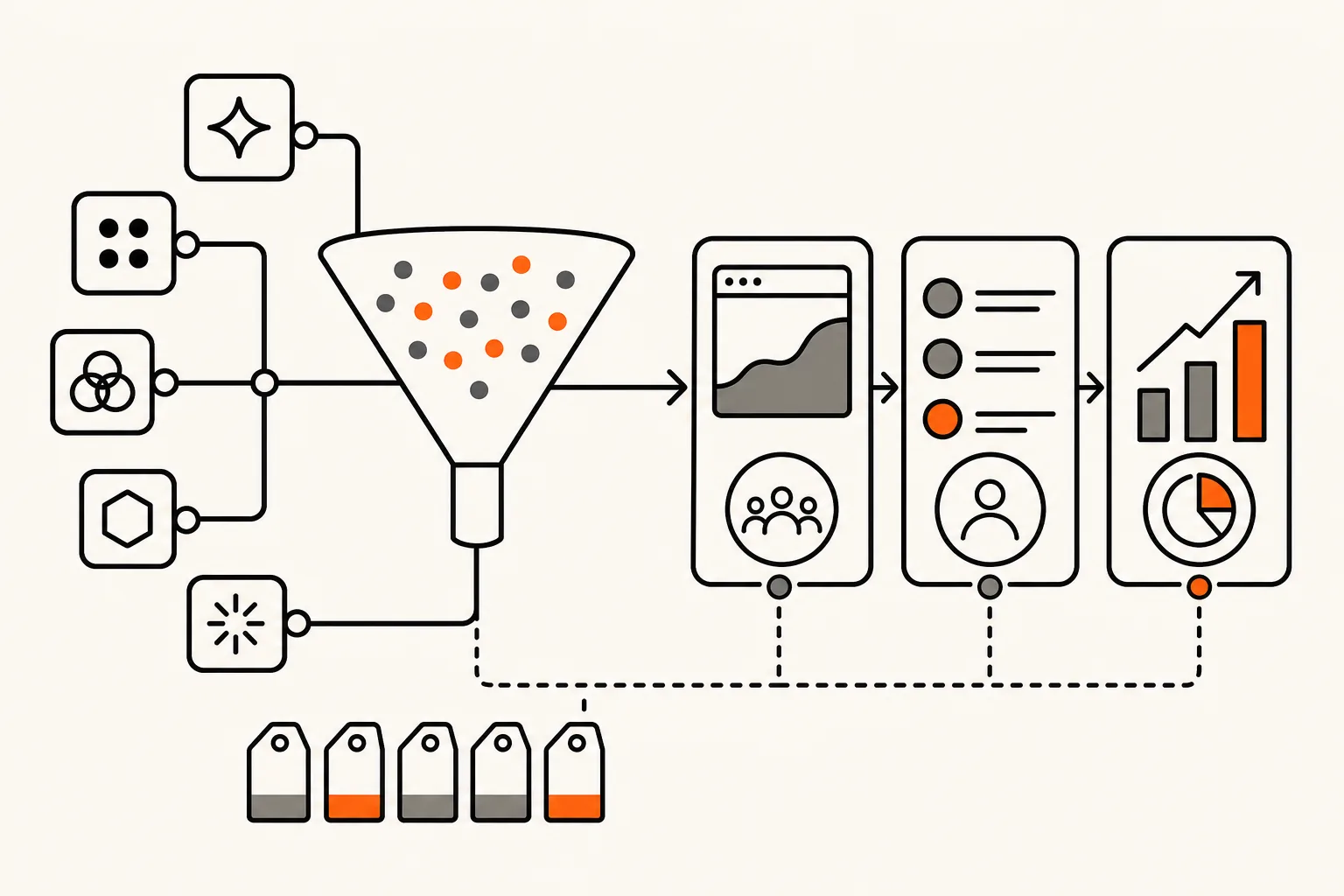
Set up a measurement chain that connects the prompt to the page and then to the commercial event. At minimum, record:
- The prompt and engine.
- The cited page or source.
- Organic position for the related query.
- Referral visits from AI systems when analytics records them.
- Conversions on the cited page.
- Pipeline value or revenue linked to those conversions.
Use tagged links in assets you control. A PDF, newsletter, video description, or campaign page can carry UTM parameters. AI-generated referrals may be incomplete, so compare tagged traffic with direct traffic, assisted conversions, branded search, and CRM source fields.
For B2B SaaS, the useful event may be a demo request, sales-qualified opportunity, or closed account. For a high-repeat-purchase consumer brand, it may be a first purchase followed by repeat value. Choose the event that matches how the company earns money.
Build a simple funnel report. The first layer shows citation coverage. The second shows organic visibility. The third shows visits and engaged sessions. The fourth shows leads or purchases. The last shows pipeline or revenue. A rise at the first layer with no movement below it may still matter, but it should change how you invest.
Do not assign all revenue to one citation. Buyers often see several sources before they act. Use assisted-conversion views where your analytics system supports them. Also review sales notes. A prospect may mention an AI answer without creating a clean referral record.
Keep a before-and-after record for every major page change. Save the old answer sample, the new page version, the ranking trend, and the conversion trend. This creates a useful operating record even when the AI result changes from one run to the next.
Cost should sit beside outcome. A self-serve tracker may be enough for a small prompt set. A service programme costs more, but it may cover the work that a dashboard leaves undone. Compare the cost with the value of qualified pipeline, not with the price of another reporting tool.
Optimitor's service model is aimed at teams that want the measurement layer connected to the programme that acts on it. For buyers who need to assess service pricing, our AI citation services pricing guide covers retainers, projects, ROI questions, and the link between citation work and SEO.
Review the report each month with one decision in mind: what will we change next? You may refresh a page, add a source, build an internal link, earn a mention, or remove a weak prompt. Pick the action that can affect a buyer's path.
By now you should have a baseline, a conversion path, and a review rhythm. That is enough to judge whether citation work is helping the business or merely producing a new monthly chart.
FAQ
What are the best AI citation tools for marketers?
The best choice depends on the work behind the measurement. Optimitor fits B2B SaaS and high-repeat-purchase brands that need SEO and AI visibility work together. Service Stories fits auto-repair shops that want fast content from shop records. A self-serve tracker may fit a small prompt set, but tracking alone won't improve the pages being cited.
What does an AI citation tool measure?
An AI citation tool measures whether an engine mentions a brand, cites its URL, and places it in an answer. Strong reports also record the prompt, engine, answer position, cited source, and recommendation context. Those fields help marketers separate a source mention from a true buying recommendation.
How do marketers measure AI share of voice?
Marketers measure AI share of voice by running a stable set of category and buyer prompts, then recording which brands appear and how often. Repeat the prompts because answers vary. Treat the result as directional. It is not the same as keyword search volume, and it should sit beside organic ranking data.
Do AI citations improve SEO traffic?
AI citations can support SEO traffic, but they don't guarantee a click. Many users read the answer without visiting a source. Track organic rankings, AI referrals, branded search, assisted conversions, and sales outcomes so you can see whether citation work improves the wider buying path.
How much do AI citation tools cost?
Pricing varies by prompt volume, engine coverage, users, report history, exports, and whether strategy is included. Manual checks cost time rather than software fees. Self-serve tools suit small tests. A service costs more but may include the SEO, content, technical, and authority work needed to change citation results.
Can structured data make a brand appear in AI answers?
Structured data can make page details easier for search systems to interpret, but it cannot make a weak page authoritative. Use accurate markup that matches visible content. Then improve the page's answer quality, source support, internal links, and organic visibility. Treat schema as a support layer, not a shortcut.
Conclusion
Choose the tool that matches the work you need to do after the report arrives. For a serious B2B or high-value consumer programme, start with an SEO-led baseline, track a focused prompt set, and connect every citation gap to rankings and revenue. The next action is simple: list your highest-value buyer prompts, run a repeatable baseline, and decide which page should change first.
Before the tool, the baseline
Our private teardown shows which page, mention or authority gap is costing you the answer, so you know what you are buying a tool to fix.
Request the teardown ↗