The shortlist starts with Optimitor, then covers eight named alternatives. The right pick depends on whether you need strategy, traffic attribution, product-feed checks, or a reporting layer.
1. Optimitor
Optimitor is a senior-led SEO and AI search visibility agency for teams that need citations and qualified organic rankings. It's best for B2B SaaS companies and consumer brands with high repeat-purchase value.
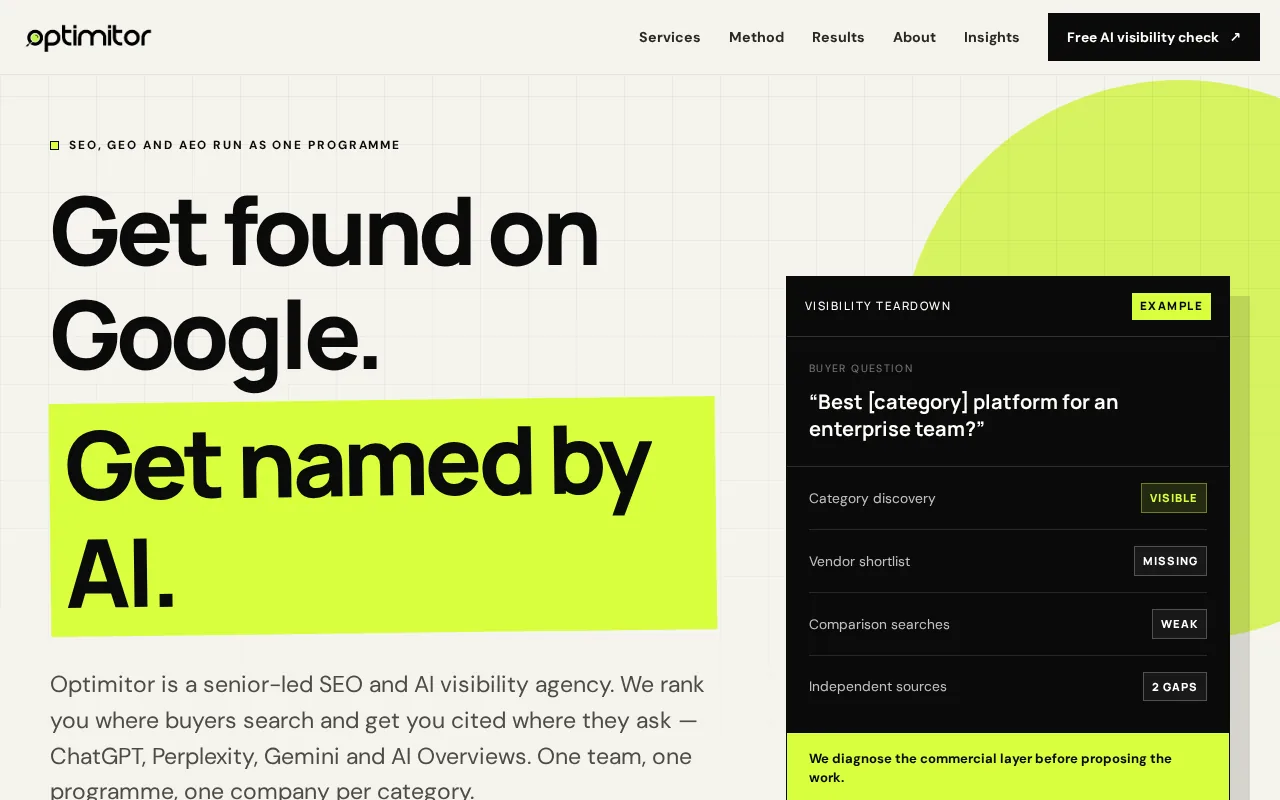
We treat AI visibility as downstream of SEO. That means we start with technical access, search demand, page structure, entity signals, internal links, and authority. We then test how ChatGPT, Perplexity, Gemini, Google AI Overviews, and Google AI Mode describe and cite the brand.
The work is built around buyer prompts, not vanity scores. We map category, use-case, comparison, and problem searches. Then we check whether the brand is discovered, shortlisted, cited, described correctly, or recommended.
That distinction matters. A brand can appear as a source without being named as the best choice. Citation work fixes source coverage. Recommendation work also needs clear positioning, proof, and third-party authority.
Our limitation is capacity by design. We take one client per competitive category and turn away direct competitors during the engagement.
For a tool-led view of prompt coverage and reporting, compare the best AI citation tracking tools. Use the comparison to spot measurement gaps, then decide whether your team can act on the findings.
2. Google Analytics 4, For downstream traffic analysis
Google Analytics 4 is a measurement layer for visits that arrive after an AI answer. It fits teams that want to connect known referral traffic with leads, sales, or product actions.

GA4 can help answer a useful question: did traffic from a known AI source land on the site and do something valuable? It can also help compare assisted visits with organic sessions after a citation change.
But it isn't a complete citation audit tool. Not all AI traffic is identifiable, and the gap between actual AI-driven visits and reported traffic remains significant. A citation can influence a buyer who never clicks, so a GA4 report will always miss part of the effect.
Use GA4 after you log citations by prompt and engine. Mark known referral sources where possible. Then compare landing pages, engaged sessions, conversions, and assisted paths against the pages that AI engines cite.
Pick GA4 when pipeline attribution is the main need. Pair it with manual prompt tests or a dedicated visibility platform when citation coverage matters.
3. Google Search Console, For organic visibility signals
Google Search Console shows organic visibility signals for pages that may later appear in Google AI answers. It's best for SEO teams that need a trusted view of queries, impressions, clicks, and indexing status.

Search Console helps you find pages losing visibility before citation rates fall. Review queries tied to buyer intent. Check which pages earn impressions but few clicks. Those pages may need clearer answers, better titles, or stronger proof.
Its key limit is scope. Search Console aggregates AI Overview data with standard web search data. There is no separate filter for AI Overview citations. It also doesn't show whether ChatGPT, Gemini, or Perplexity selected your page.
Use it for the leading indicator. If a priority page drops from organic visibility, treat a later citation drop as a likely risk. Then test the same buyer prompts across several engines.
Google Search Console monitors search performance and indexing. It remains a core SEO check, but it isn't a full answer-engine log.
Search Console earns its place in every AI citation audit checklist. Just don't mistake an organic report for a citation report.
4. Yotpo Discover, For e-commerce recommendation audits
Yotpo Discover is aimed at e-commerce and retail brands that want to improve how often AI surfaces recommend them. It covers ChatGPT, Gemini, and Google AI Overviews.

Its fit is strongest when product reputation affects the answer. It also lists three automated agents, which gives a retail team more room to act on findings than a read-only dashboard.
The coverage-automation trade-off still needs close review. A tool may monitor several engines while leaving the team to fix product facts, reviews, category pages, and feeds by hand. Ask what each agent changes, where it writes the change, and how approval works.
Yotpo Discover is a choice for brands seeking active improvement on AI surfaces. That makes it more action-focused than a simple traffic report, but the exact workflow should be checked against your commerce stack.
Choose it when recommendation visibility is tied to retail trust. For a B2B site with no product catalog or review layer, much of that fit may be wasted.
5. Profound, For B2B brand-perception monitoring
Profound is best for B2B and SaaS marketing teams that want to follow high-level brand perception across answer engines. It suits leaders who need a recurring view of how AI describes their company and category.
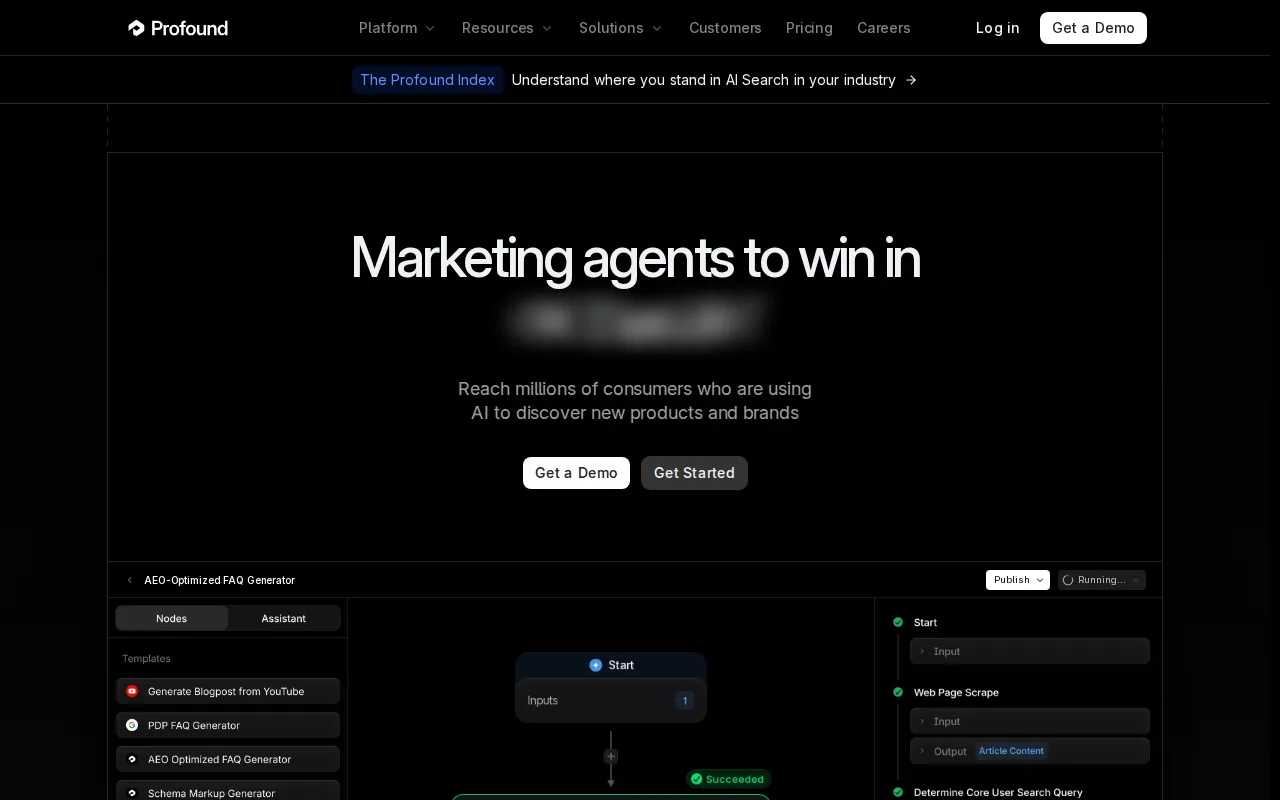
There is a sharp strategic warning here. Profound lacks the commerce-specific SKU logic needed by a high-volume retail catalog. That means its broad automation story doesn't automatically make it a good fit for e-commerce.
This is the coverage-automation paradox. More monitoring does not equal better execution. A B2B team may care about category language, competitor mentions, and sentiment. A retailer may need product attributes, stock data, reviews, and feed accuracy.
Use Profound when senior stakeholders need brand-perception monitoring across a defined prompt set. Keep a separate plan for page edits, technical fixes, and authority work.
6. Limy, For bot-driven referral attribution
Limy is for brands with technical teams that want to measure and attribute bot-driven referral traffic. Its research profile lists Cloudflare as an integration.
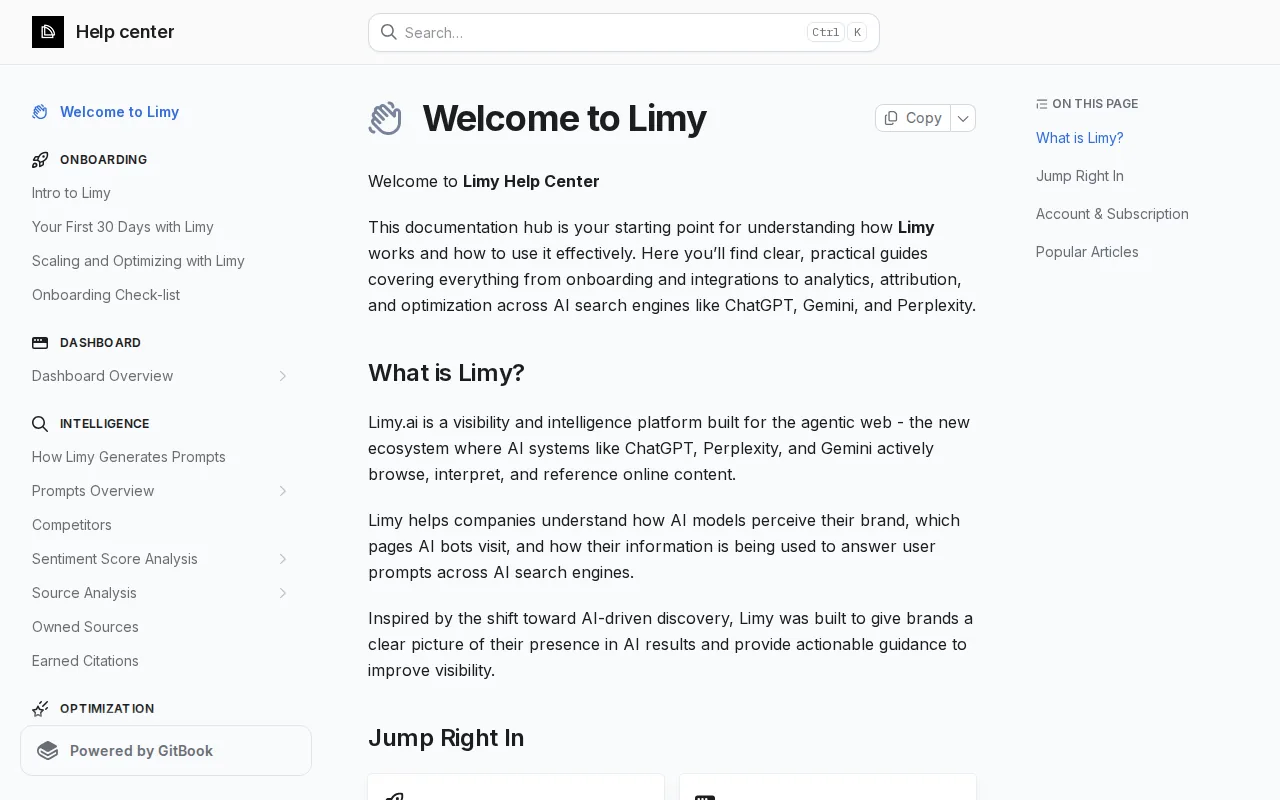
That CDN connection can make Limy useful when server data matters. A technical team can inspect bot activity beside known referrals and ask whether answer-engine crawlers reach the pages that matter.
Limy isn't a content or SEO repair system. The supplied limitation is direct: you'll still need another platform for content work and site fixes. That makes it a specialist layer, not a complete AI citation audit checklist.
Before buying, define the handoff. Who turns a crawl finding into a robots change? Who maps a cited URL to a content update? Who checks whether a referral produced qualified pipeline?
We'd choose Limy when bot attribution is the blind spot and engineering owns the workflow. If marketing needs prompt tracking and page recommendations in one place, it will need another system beside Limy.
A useful supporting asset is a technical assessment, especially when technical teams need to rank workflow fixes before they assign engineering time. The assessment should lead to owners and dates, not another unreviewed score.
7. Scrunch, For crawler and technical footprint audits
Scrunch is aimed at technical SEO agencies and complex brand sites that run into bot-crawling limits. It belongs on a shortlist when access, rendering, or crawler behavior is the main concern.
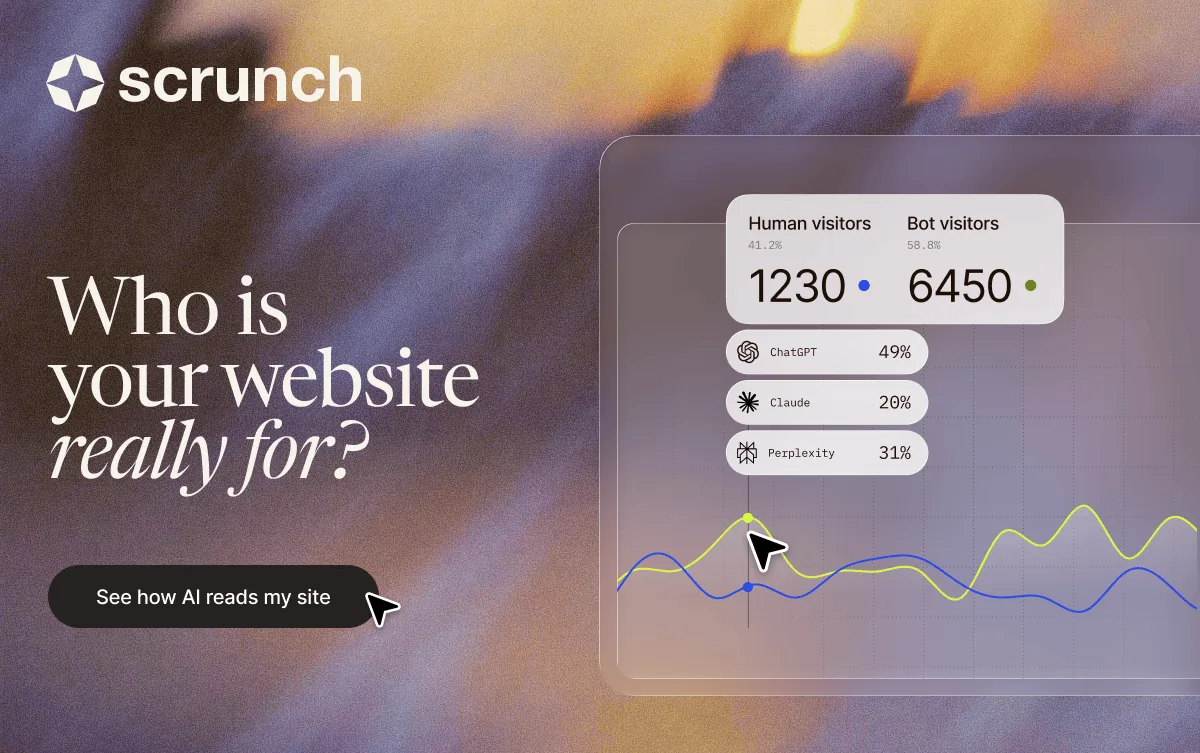
A technical audit should check robots rules, server responses, sitemap health, canonical URLs, mobile performance, and whether key content appears without client-side scripts. It should also inspect server logs when bot user agents are available.
Scrunch's stated limitation is upkeep. Maintaining two parallel versions of a site adds ongoing work for a marketing team. That cost can show up during releases, template changes, redirects, and content updates.
Use a simple test before committing. Fetch a priority URL with a plain HTTP request. Review the returned body. If the answer text appears only after JavaScript runs, the page needs a technical fix before more content work.
Scrunch is a good fit for a team that already has technical ownership. It is less attractive when no one has time to maintain the extra site layer.
8. Conductor, For combined SEO and AI visibility reporting
Conductor is for large marketing teams that want classic SEO and AI search trends in one dashboard. It fits organizations with several stakeholders who need a shared reporting view.
The value is operational consistency. SEO can review rankings while brand or content teams review AI visibility. A shared report can reduce the gap between a falling search page and a falling citation rate.
The supplied limitation is important for commerce teams. Conductor doesn't integrate customer reviews natively and doesn't run active automation to close the gaps it finds. A retail team may still need review data, product feed checks, or manual action plans.
Set the reporting rules before rollout. Define the prompt set, engine list, market, competitors, citation meaning, and update cadence. Otherwise, separate teams may report different versions of visibility.
Choose Conductor when consolidation is the goal. Don't choose it as a substitute for strategy or execution.
9. ReFi, For multi-brand product-catalog audits
ReFi is built for multi-brand portfolios in beauty, apparel, and electronics that need to tune large catalog feeds for automated buyers. It is a specialist choice for complex product data.
Catalog audits should check whether product names, attributes, variants, availability, and category relationships stay consistent across feeds and pages. Clear data gives answer engines less room to confuse one product with another.
ReFi leans toward static product details rather than off-site customer sentiment. That is its stated limitation. A catalog can be technically clean while buyers still s or little third-party proof.
Use ReFi when feed quality is the main blocker. Then pair the catalog work with review monitoring and source tests across shopping prompts. A clean product feed won't fix a thin authority footprint.
The decision rule is simple: select ReFi for catalog scale, not for a full brand-perception programme.
Comparison table: AI citation audit coverage by tool or service
| Tool or service | Best fit | Named engine coverage | Automation or integration signal | Main gap to test |
|---|---|---|---|---|
| Optimitor | B2B SaaS and high-value consumer brands | ChatGPT, Perplexity, Gemini, Google AI surfaces | Strategy and execution | Limited category capacity |
| Google Analytics 4 | Downstream traffic analysis | ChatGPT referral data may be visible | — | Much AI traffic is not identifiable |
| Google Search Console | Organic visibility signals | Google AI Overviews and AI Mode data is aggregated | — | No separate AI citation filter |
| Yotpo Discover | E-commerce recommendations | ChatGPT, Gemini, Google AI Overviews | Three agents; Yotpo signals | Check exact commerce workflow |
| Profound | B2B brand perception | — | No-code Agents | No SKU logic for large retail catalogs |
| Limy | Bot referral attribution | — | Cloudflare | Needs another system for content fixes |
| Scrunch | Technical crawler audits | — | — | Parallel-site upkeep |
| Conductor | Large-team reporting | — | Combined SEO and AI dashboard | No native review integration or active gap repair |
| ReFi | Multi-brand product catalogs | — | Catalog-feed focus | Limited off-site sentiment coverage |
The pattern is clear. Three listed native integrations. Five described automation. Nine listed at least one limitation.
That is why we judge coverage by actionability, not by the number of engines in a sales page. A dashboard that shows a gap without connecting it to a page owner is still a manual process.
The AI citation audit checklist to apply before buying
Use this checklist to test a product before you trust its score. The goal is a repeatable audit, not a one-time screenshot.
Prompt coverage
Build a stable prompt set from real buyer language. Include category searches, use-case searches, comparison prompts, and problem searches. Keep the core set unchanged, then add a small rotation list for new themes.
Run the same prompts across ChatGPT, Gemini, Perplexity, and Google AI Overviews where access allows. Record the date, region, mode, cited domains, brand position, sentiment, and whether the answer recommends your company.
Gap diagnosis
Separate three failure types:
- Discovery: the engine cannot find or access the page.
- Selection: the page is available but loses to another source.
- Extraction: the answer is present but hard to lift cleanly.
This distinction changes the fix. Discovery needs crawl or index work. Selection needs stronger proof and authority. Extraction needs clearer structure and tighter answers.
Content and entity checks
Put the direct answer near the top of each priority page. Use a clear title. Give each H2 one job. Add short definitions, comparison tables, facts with dates, and source links where they help verification.
Check that the homepage, service pages, product pages, and articles describe the brand in the same terms. AI systems need to understand the category, audience, use cases, and limits without stitching together conflicting claims.
Refresh old facts and dates. Audit pricing, features, product details, examples, and customer proof. A stale page can still rank while giving an answer engine a poor reason to cite it.
Technical access
Review robots.txt and server logs. Confirm that important pages return readable content through a plain request. Check the XML sitemap, canonical tags, redirects, page speed, and mobile layout.
Don't assume an LLM.txt file will solve a crawl problem. If you maintain one, treat it as a helpful index of priority pages and their purpose. It cannot replace crawlability, index coverage, or useful page content.
Measurement and cadence
Track citation rate by prompt and engine. Add share of voice against named competitors. Log source type, citation position, sentiment, accuracy, and referral traffic where attribution exists.
Use monthly light checks for prompt coverage and accuracy. Run a dee each quarter. A video layer can also help when your audience watches explainers. For teams producing that content, a shared editing and review tool can support shared review and permissions, but the video still needs a clear topic and a matching page.
Finally, rank the backlog. Fix pages tied to high-intent prompts, competitor-owned answers, and clear technical barriers first. Ten well-fixed pages beat a hundred shallow edits.
FAQ
What is an AI citation audit checklist?
An AI citation audit checklist is a repeatable set of checks for prompt visibility, cited sources, page accuracy, crawl access, content structure, and measurement. It shows whether AI engines discover your brand, select your pages, extract useful passages, and describe the business correctly across several query types.
Can a site rank on Google but miss AI citations?
Yes, a site can rank on Google and still miss AI citations. AI systems may prefer a page with clearer answers, stronger third-party proof, fresher facts, or easier extraction. A ranking is one signal. It doesn't prove that ChatGPT, Gemini, Perplexity, or Google AI will select the page as a source.
Which AI engines should an audit test?
Test ChatGPT, Gemini, Perplexity, and Google AI Overviews first. Add Google AI Mode when it matters to your market. Keep the prompt wording stable, record the mode and date, and log every cited domain. Different engines may draw from different sources, so one platform cannot represent total visibility.
What metrics belong in an AI citation audit?
The core metrics are citation rate, share of voice, cited-page position, source type, sentiment, citation accuracy, and known referral traffic. Track each metric by prompt and engine. A single overall AI visibility score can help with reporting, but it should never hide the pages and queries behind the score.
How often should an AI citation audit run?
Run light citation checks monthly and a deeper audit each quarter. Monthly tests catch shifts in prompts, sources, and brand accuracy. Quarterly reviews give your team time to assess crawl access, page structure, authority, and content freshness. Always retest the same core prompts so results remain comparable.
Conclusion
Choose a tool based on the gap you need to fix, not the size of its dashboard. For companies that need one team to connect organic rankings, technical SEO, content, authority, and AI citations, Optimitor is the strongest fit. Start by logging 20 to 30 buyer prompts across your priority engines, then use the results to build a page-level action list.
Before you buy the dashboard
Our private teardown runs the checklist on your category first, so you know which gap you are actually paying a tool to fix.
Request the teardown ↗