Step 1: Define the SaaS Queries and Entities You Need to Own
Start this AI search visibility checklist for SaaS companies with demand, not prompts. Your goal is to map the questions that can move a buyer toward a shortlist.
Pull query data from your search console, CRM, sales call notes, paid search reports, and product analytics. Then group the terms into four useful buckets:
- Category searches, such as software category and platform terms.
- Use-case searches tied to a job, pain point, or team.
- Comparison searches that mention alternatives, competitors, or switching.
- Problem searches that describe the issue before a buyer knows the product category.
Do not stop at keywords. List the entities that should connect to your company. Include your product name, category, core use cases, buyer roles, integrations, compliance terms, and the people who can explain the product with authority.
Now run those queries through ChatGPT, Perplexity, Gemini, Google AI Overviews, and AI Mode. Record the answer, cited pages, named brands, missing facts, and the tone of each mention. Test the same prompt more than once because generated answers can vary.
Separate two outcomes. A citation means a source was used. A recommendation means your company was named as a good choice. You may earn citations without entering the shortlist. Citation growth needs better source coverage. Recommendation growth also needs clear positioning and proof.
Our AI Citation Audit for B2B SaaS uses this prompt-first process to connect missing citations with the SEO and entity signals behind them. That keeps the audit tied to pages and revenue questions instead of a vague visibility score.
By now you should have a prompt set, an entity map, and a list of pages that either support or fail each buying question. Keep the set small enough to review by hand, but broad enough to cover the full buying path.
Step 2: Fix the Technical Signals AI Crawlers Depend On
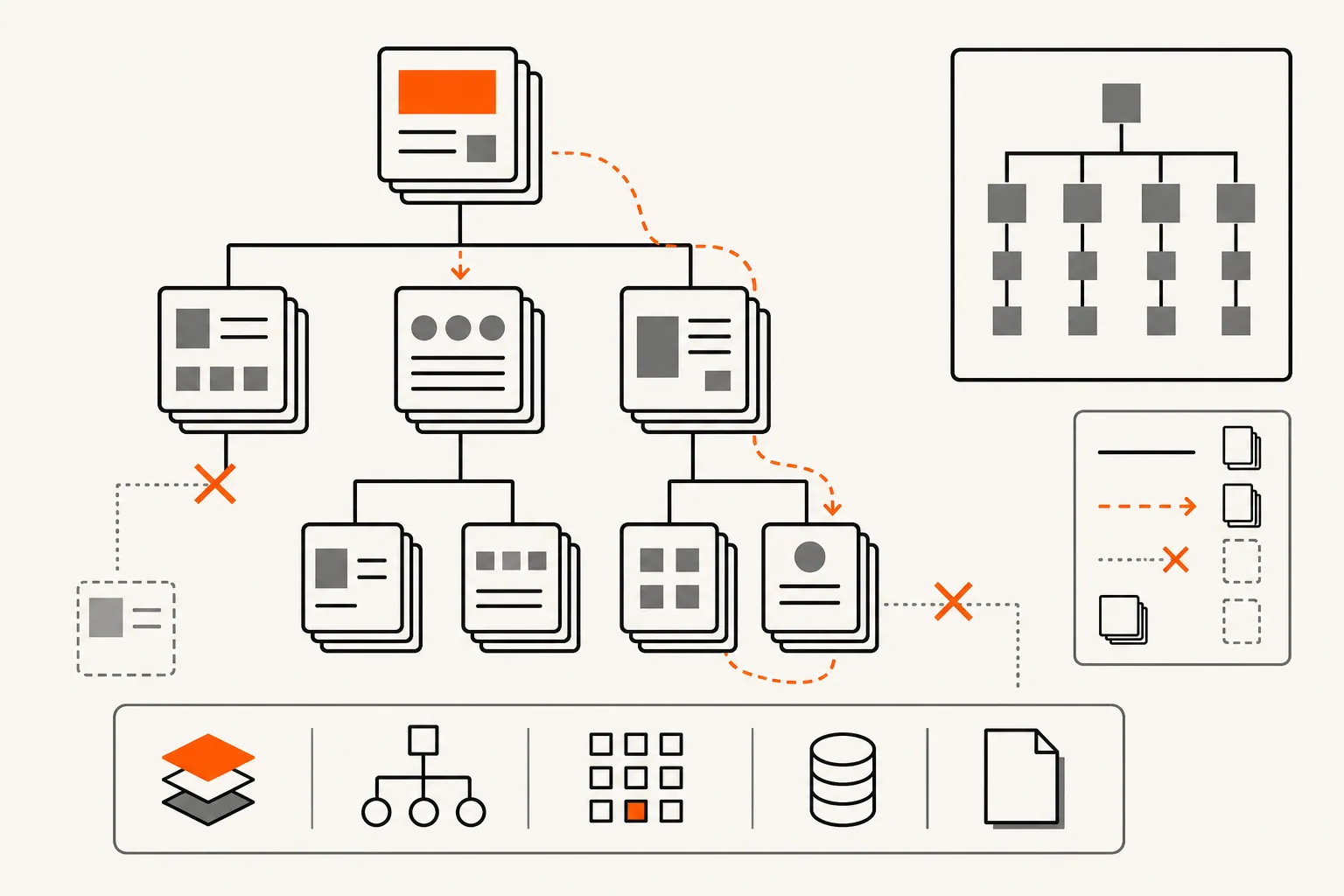
Technical SEO gives AI systems a clean path to your SaaS content. Before you publish more pages, make sure crawlers can find, load, understand, and index the pages you already have.
Run a crawl and inspect these areas first:
- Check robots.txt for rules that block important sections or assets.
- Review XML sitemaps for current, canonical URLs only.
- Find pages with no internal links from relevant content.
- Check canonical tags, redirects, status codes, and index directives.
- Test key pages on mobile and confirm the main answer appears in the rendered HTML.
- Remove thin duplicates that split signals across several similar URLs.
AI crawlers still need accessible source material. A page that hides its product facts inside an image, a script, or a gated tool is harder to retrieve than a page with clear text and stable headings.
Use one primary URL for each commercial question. If you have five pages targeting the same “best software for” query, choose the page that deserves the ranking. Redirect, merge, or reposition the others. This gives internal links and external mentions one clear destination.
Ranking tactics should help users rather than manipulate rankings. This guidance matters here because scaled, low-value AI pages can add crawl load while weakening trust in the site.
Also check page speed, but don't turn the audit into a score chase. Fix the slow template, blocked resource, or broken script that stops a buyer from reading the answer. A perfect lab score won't rescue a page with weak content or no authority.
Optimitor treats this work as part of the same SEO and AI visibility programme. We do not bolt an AI report onto a broken site. Technical fixes come first when they block qualified rankings or prevent a useful page from being found.
By now you should know which technical defects affect your target pages. Fix those defects before asking a content team to produce another batch of URLs.
Step 3: Establish an Organic and AI Visibility Baseline
A useful AI search visibility baseline compares citations with organic performance. Track both because a citation report without ranking and traffic context can lead your team toward the wrong fix.
For each prompt, record five fields:
- Whether your brand appears.
- Whether the answer cites your site.
- Which URL earns the citation.
- Which competitors appear instead.
- Whether the mention is positive, neutral, or negative.
Then add organic data for the matching topic. Capture the target page's rank range, impressions, clicks, conversions, and assisted pipeline where your analytics setup supports it. Mark the date and model for every check. AI answers change, so a single spot check is not a trend.
Use a tracker for repeat measurement, but keep human review in the process. Research on AI visibility trackers has noted that simple mention share can hide context. A brand may appear once in a long answer or in a negative comparison. Count position and meaning, not only presence.
That is also why we treat tracking as measurement rather than the product. The useful question is not “Did the score rise?” It is “Which page or source changed, and did that change improve the answer for a buyer?”
Build a baseline sheet with one row per prompt and one column per month. Add a notes field for source changes, new pages, product changes, and public mentions. This gives your SEO lead a record of what changed before a visibility shift appeared.
Use the baseline to set priorities. If a page ranks well but never earns citations, inspect its structure, factual clarity, and entity links. If AI systems cite the page but never recommend the company, work on proof, differentiation, and category positioning. If both organic rankings and citations are weak, start with the page and its authority.
Our AI citation tracking tools comparison explains where monitoring helps and where it stops. A tool can reveal the gap. Your programme still has to fix the page, source, or signal behind it.
The milestone is a baseline your team can reproduce. Without that, every new AI answer feels like progress or failure based on a single anecdote.
Step 4: Build Pages That Answer SaaS Buying Questions Clearly
Clear pages give AI systems usable passages and give buyers enough evidence to keep reading. Write for the question behind the query, not for a target phrase repeated across a template.
Start each page with a direct answer. If the page targets “best workforce planning software,” state what the category is and which buyer problem it solves. Then explain who needs it, where it fits, and what limits the choice.
Use a page structure that matches the decision:
- Define the category in plain language.
- Explain the main use cases and buyer roles.
- Compare the important decision criteria.
- Show how the product works through a real workflow.
- State limitations, integrations, security facts, or implementation needs.
- Answer the follow-up questions that appear in sales calls.
Give each claim a source or a clear owner. Product facts should come from stable documentation. Expert claims should come from a named subject matter expert. Independent claims need third-party coverage, earned mentions, or a credible publisher.
Do not manufacture an expert voice with generic quotes. A real subject matter expert can publish a useful explanation under their own name, then support it through interviews, webinars, or industry coverage. The goal is a consistent point of view that buyers can verify.
External creators can help when your internal experts cannot publish. Choose partners for audience fit, subject knowledge, consistent work, and citations outside their own social feed. Follower count alone is a weak filter. A small audience of decision-makers can matter more than a large audience with no buying relevance.
Keep sponsored content honest. A hard product pitch may win a click, but it gives both readers and AI systems less useful information. Ask the writer to explain the use case, trade-offs, and test conditions in their own voice.
End the page with a next step that matches intent. A category page may point to a comparison. A product page may point to a demo or technical review. A problem page may point to a checklist. This keeps the path useful instead of forcing every visitor into the same sales form.
By now you should have a short list of pages that answer high-value questions with facts a buyer can check. Those pages become the targets for internal links and authority work.
Step 5: Strengthen Internal Links, Schema, and Authority Signals
Internal links tell search systems how your SaaS pages fit together. Schema adds machine-readable context. External authority helps confirm that your company and claims exist beyond your own site.
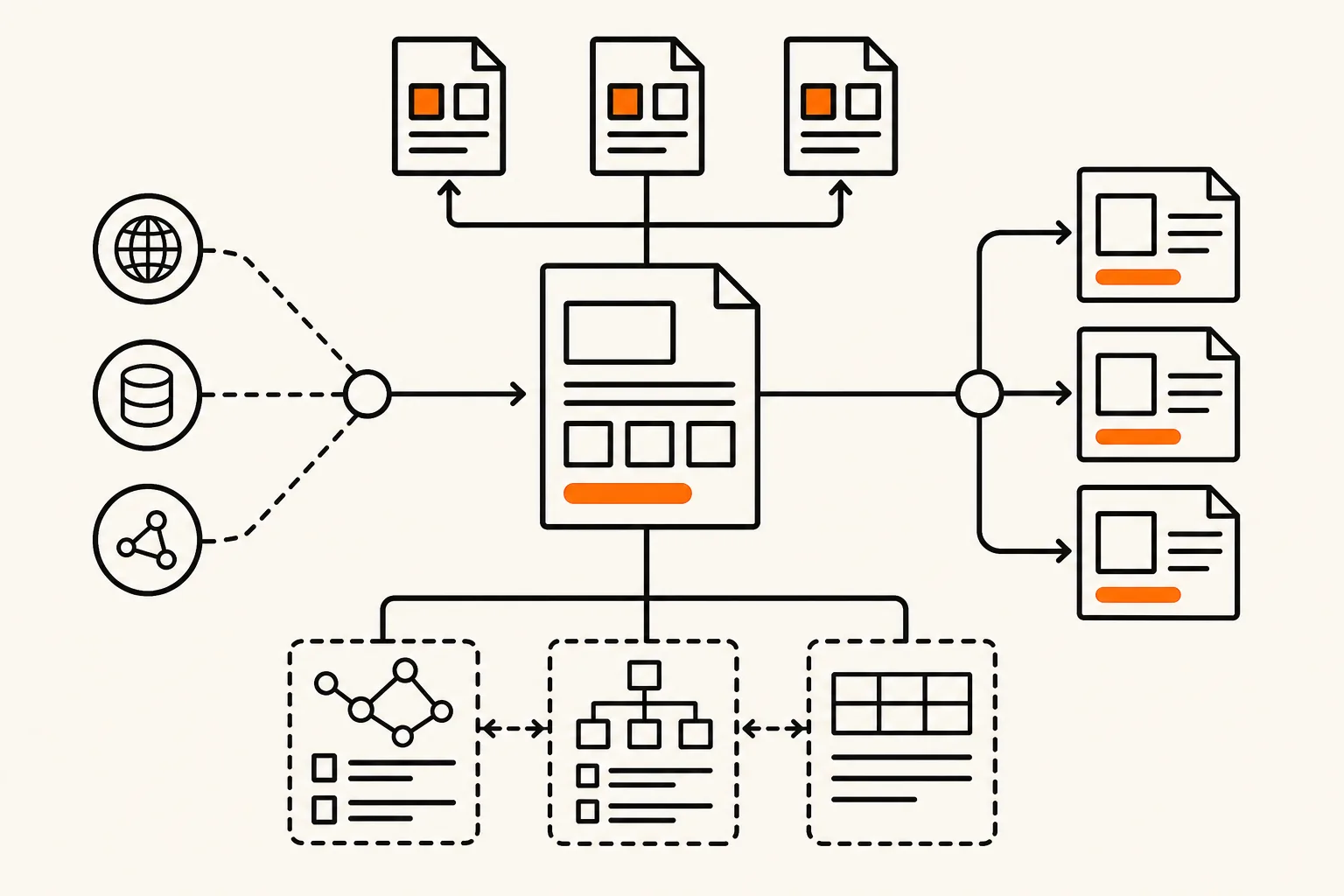
Build a simple hub-and-spoke structure. Link the main category page to use-case pages, comparisons, integration pages, and proof assets. Link those supporting pages back to the category page with natural anchor text. Do not use the same exact phrase on every link.
Review the path as a buyer would. Can someone move from a problem page to a solution page, then to a comparison and a product page? If the answer requires a site search, add a link. If a link points to an old or weak page, replace it with the page that now carries the commercial answer.
Add structured data where it matches visible page content. A structured-data vocabulary provides shared types and properties for describing entities such as organizations, products, software applications, articles, and FAQs. Markup can clarify a page, but it cannot make unsupported claims true.
Keep entity facts consistent. Your company name, product name, category, authors, documentation, and profiles should not contradict one another. If one page calls the product an analytics platform and another calls it a project tool, explain the relationship rather than leaving the system to guess.
Authority work should support the pages you want cited. Earn mentions through original research, useful data, expert commentary, partner resources, and editorial coverage. A link from an unrelated page may add little context. A relevant mention that explains your category position can help more.
Track the source, target URL, topic, and date for each earned mention. When an AI answer cites an outside page, inspect why. It may be using that page for a definition, a comparison, a product fact, or independent proof. Build the missing source type instead of chasing links at random.
Optimitor runs these tasks as one programme because separate teams often aim at different pages. One team writes a category claim. Another builds links to an old blog post. A third tracks AI citations without knowing either change happened. One team, one programme, one company per category keeps the target clear.
Use a monthly review to check whether the target pages gained qualified rankings, citations, recommendations, and assisted conversions. If a metric moves without a useful business result, inspect the path before adding more activity.
FAQ: AI Search Visibility for SaaS Companies
What is AI search visibility for SaaS companies?
AI search visibility is the rate at which AI systems find, cite, describe, or recommend a SaaS company for relevant buyer questions. It depends on accessible pages, clear entities, useful content, internal links, and outside authority. Treat it as an SEO outcome with an added measurement layer, not as a separate publishing system.
Does SaaS AI visibility replace traditional SEO?
No. Traditional SEO remains the base for SaaS AI visibility because search systems still need pages they can crawl, understand, and trust. A dashboard may show that your brand disappeared from an answer, but the fix may be a ranking issue, weak content, unclear positioning, or missing authority. Start with the source page before buying another tool.
How often should a SaaS company test AI prompts?
Test your core prompts on a repeat schedule, then run extra checks after major page, product, or authority changes. Monthly review is a sensible starting point for a small prompt set. Record the model, date, cited URL, competitors, and sentiment. More checks only help when someone reviews the cause behind the change.
What pages should SaaS companies build for AI citations?
Build pages that answer category, use-case, comparison, integration, implementation, and problem questions. Each page should make one main claim clear, support it with facts, and explain its limits. Product pages alone rarely cover the full buying journey. Strong SaaS visibility comes from a connected set of pages with distinct jobs.
Do SaaS companies need a separate AI SEO tool?
No, a separate AI SEO tool is optional. Tracking software can help record prompts and citations, but it does not replace technical SEO, content work, entity cleanup, or authority building. Optimitor treats citation tracking as measurement inside one SEO and AI visibility programme, which avoids paying for a dashboard without a plan to fix the gaps.
Conclusion
Run this checklist against a small set of high-value buyer prompts first. Fix the pages and signals behind the gaps, then measure citations beside rankings and pipeline. If your team lacks the time or senior SEO depth to run that work as one programme, speak with Optimitor about an integrated plan for your category.
Run the checklist on your category
Our private teardown runs three Google searches and three AI buyer questions in your category, and shows who gets named instead of you.
Request the teardown ↗