What AI Citations Are and How They Relate to Rankings
An AI citation is a reference that a generative engine (ChatGPT, Gemini, Perplexity, etc.) pulls from the open web and inserts into its answer. The engine treats the source like a human‑written citation: it shows the title, URL and a short excerpt. In practice, a citation means the model judged the page trustworthy enough to quote.
Because the model reads the same index that Google crawls, a page must first rank in organic results before an AI can even see it. When Google places a page on the first page, the model’s retrieval layer often scores it high enough to include it as a citation. The reverse is also true, if a page falls out of the top‑10, the AI’s likelihood of citing it drops sharply.
Optimitor builds on this fact. We map the exact LLMs we track across conversational AI and search experiences, including ChatGPT, Gemini, Google AI Overviews and Google AI Mode, and then tie their citation data back to classic SEO signals. That transparency lets us show clients exactly which rankings drive which citations.
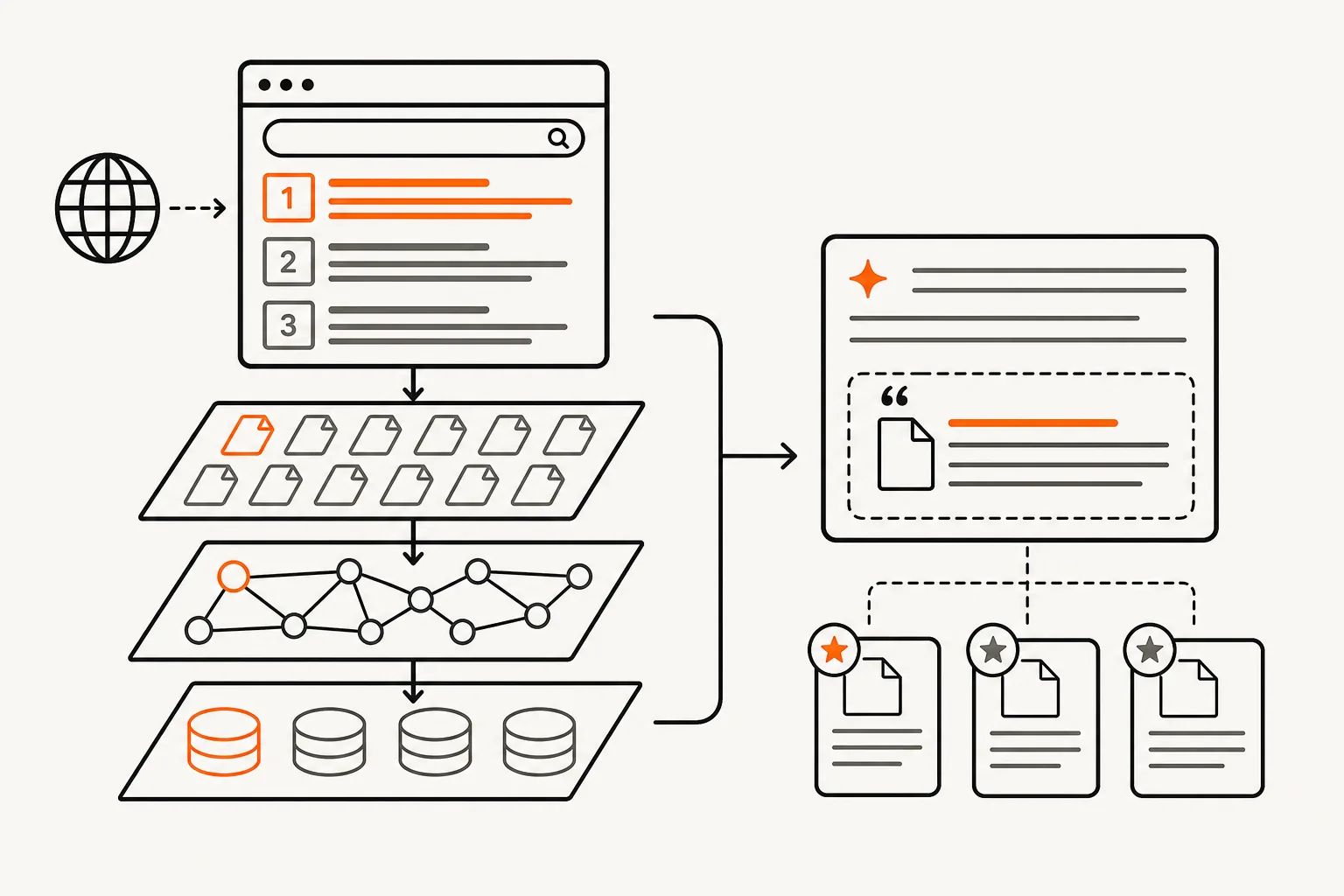
For a usable roadmap, see our AI citation strategy for B2B SaaS. It walks you through aligning keyword research, schema work and internal linking so that the same pages that rank in Google also surface in AI answers.
Why Organic Rankings Usually Lead AI Citations
Search engines rank pages based on relevance, authority and technical health. Generative engines pull from the same relevance signals, then apply a second layer of freshness and factual confidence. In most cases the second layer mirrors the first, a page that ranks #3 for a commercial term also has a high chance of being quoted.
Because the model prefers sources that are both fresh and authoritative, any dip in organic rankings immediately reduces the citation pool. That’s why we see a cascade: a ranking drop → fewer AI mentions → lower AI‑driven traffic.
Optimitor helps you keep the cascade from happening. By monitoring both SERP positions and citation frequency, we spot a ranking slip before the AI citations disappear. The AI citation optimization for brands page explains how we set up alerts that tie the two signals together.
See the search quality guidelines for information about search quality.
Where the Ranking-to-Citation Relationship Breaks Down
Even with a strong ranking, a page can be ignored by AI. The model looks for clear, structured answers. If a page lacks schema markup or presents its data in a long paragraph, the engine may skip it in favor of a more digestible source.
Another break point is topical relevance. A page that ranks for “enterprise SEO tools” may not be cited for a question about “how to build a knowledge graph”. The AI matches query intent to content intent, not just ranking position.
Finally, citation engines have their own crawl budgets. Some LLMs pull from specific domains (e.g., academic sites, Reddit, and other publishing platforms). If your content lives only on a corporate blog, the model might not prioritize it unless you earn links from those high‑visibility platforms.
These gaps explain why some brands appear in AI answers without ever showing up in Google’s featured snippets, and vice‑versa. The solution is to make the content both rank‑worthy and citation‑ready.
What to Change in Your SEO Programme
First, audit your keyword universe with AI‑prompted research to identify high‑intent phrases that buyers and LLMs use. This gives you a list of conversion‑focused keywords that are likely to be cited.
Second, tighten on‑page signals. Use FAQ schema, How‑To schema and clear answer blocks of 40‑60 words. That format matches the snippet style LLMs prefer. Use the structured data documentation when implementing markup.
Third, earn citations from external platforms. Pitch podcasts, newsletters and industry newsletters that LLMs crawl.
Fourth, align your internal linking architecture. Ensure every AI‑ready page is reachable within three clicks from the homepage. A shallow crawl path reduces the chance the model’s retrieval layer skips the page.
Finally, set up a dual‑monitoring dashboard. Track organic rankings with any SEO tool and pair that data with citation counts from our internal monitoring system. When a ranking dips, you’ll see the citation count fall within days, not weeks.
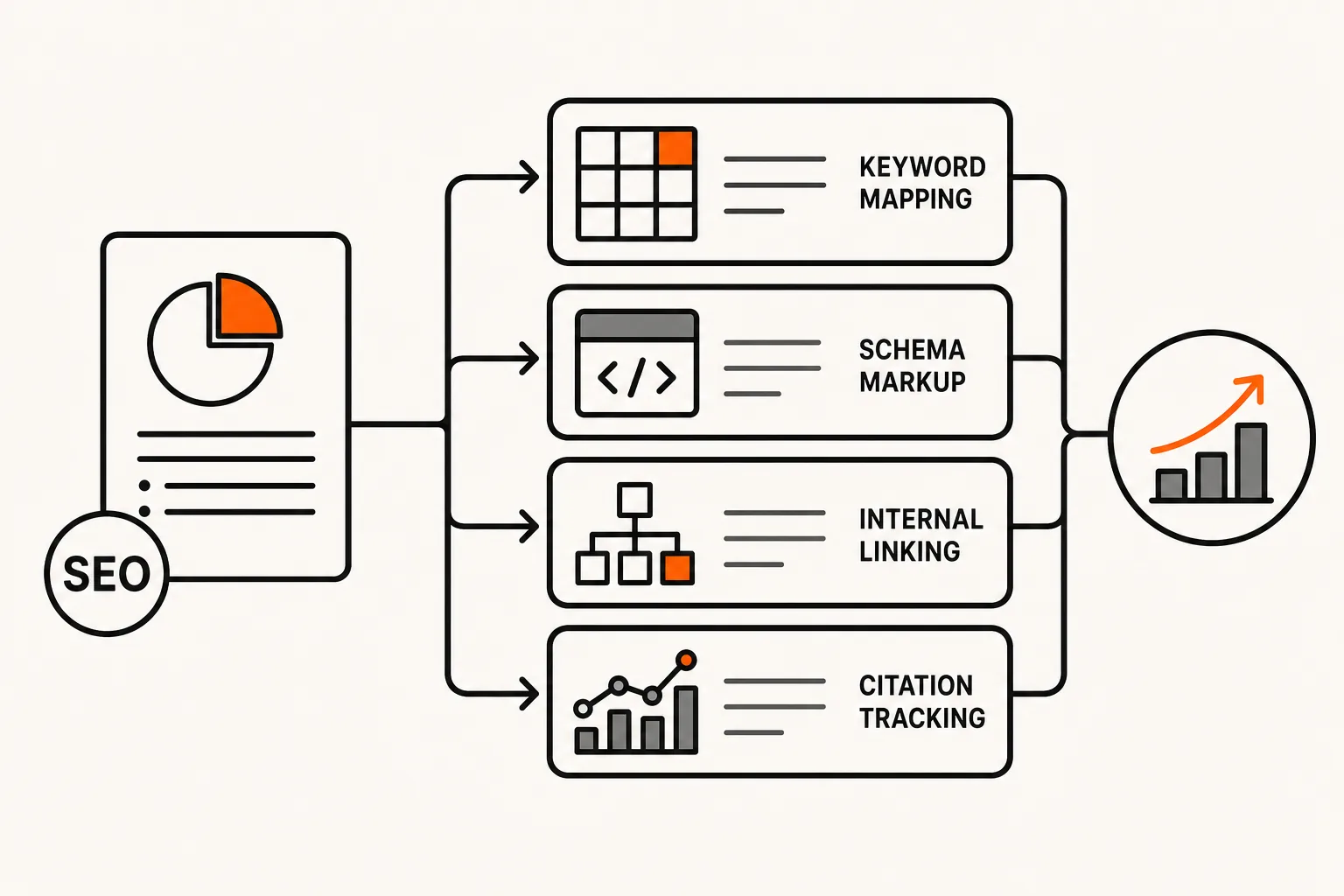
Optimitor applies this exact workflow for B2B SaaS firms. Our B2B SaaS SEO program blends technical fixes, content architecture and citation tracking into one integrated plan.
FAQ
Do AI citations improve organic rankings?
AI citations themselves do not directly boost Google rankings, but they signal that a page is high‑quality and frequently referenced, which often correlates with strong organic signals.
Which LLMs track my site most often?
ChatGPT and Google AI Overviews pull from Google’s index most aggressively, followed by Gemini and Perplexity. Optimitor monitors all five to give a full picture.
Can I buy AI citation services without SEO work?
No. Without a solid SEO foundation, the AI has nothing reliable to cite. Citation services work best when paired with traditional SEO tactics.
How fast can I see a rise in AI citations after fixing rankings?
Typically within a week to ten days, once the search engine re‑crawls the updated page and the LLM refreshes its knowledge base.
Is there a standard tool to track AI citations?
Few tools offer full integration. Optimitor’s own citation dashboard links directly to ranking data, giving a single view of both signals.
Conclusion
Focus on solid organic rankings first, they are the engine that powers AI citations. Use Optimitor’s integrated programme to align keyword research, schema markup and citation monitoring, then watch both Google and AI visibility rise together.
See the cascade on your own rankings
We track your Google rankings and AI citations on the same topics every month, so you can see which one moves first.
AI visibility tracking